How to Choose the Best Portable ECG for Your Needs?
Choosing the right Portable ECG is crucial for both patients and healthcare providers. According to a report by MarketsandMarkets, the portable ECG market is expected to reach $3.4 billion by 2026, demonstrating rapid growth in this sector. The rise in cardiovascular diseases drives demand for convenient and efficient monitoring solutions. As Dr. James H. Bell, a noted cardiologist, states, “A Portable ECG can provide real-time data, enabling timely interventions.”
However, selecting the best Portable ECG can be daunting. Variability in features, accuracy, and usability makes the decision complex. Enhanced portability often comes with trade-offs in data quality or battery life. An informed choice requires a clear understanding of the device's specifications. Additionally, professional recommendations from medical experts emphasize the significance of user-friendly interfaces and accuracy in readings. With this knowledge, individuals can navigate their options more effectively.

Understanding Portable ECG: Key Features and Specifications
When selecting a portable ECG device, it’s vital to understand its key features. Battery life is essential; some models offer up to 12 hours on a single charge. This can be crucial for continuous monitoring, especially in remote areas. Additionally, screen size matters. A larger, high-resolution display facilitates easier reading of results.
Many portable ECGs offer wireless connectivity, allowing seamless data transfer to smartphones or tablets. This feature enhances real-time monitoring and enables professionals to analyze the data efficiently. According to industry reports, over 75% of users prefer devices that incorporate cloud storage for easy access and analysis.
Tips: Look for devices with multiple lead options. More leads enhance diagnostic accuracy. Pay attention to the ease of use; complicated interfaces can lead to errors. Lastly, ensure the device meets regulatory standards for reliability. This is essential for obtaining accurate readings, especially in critical settings. Your device should also include adequate user support.
Assessing Your Health Monitoring Needs: Types of Portable ECGs
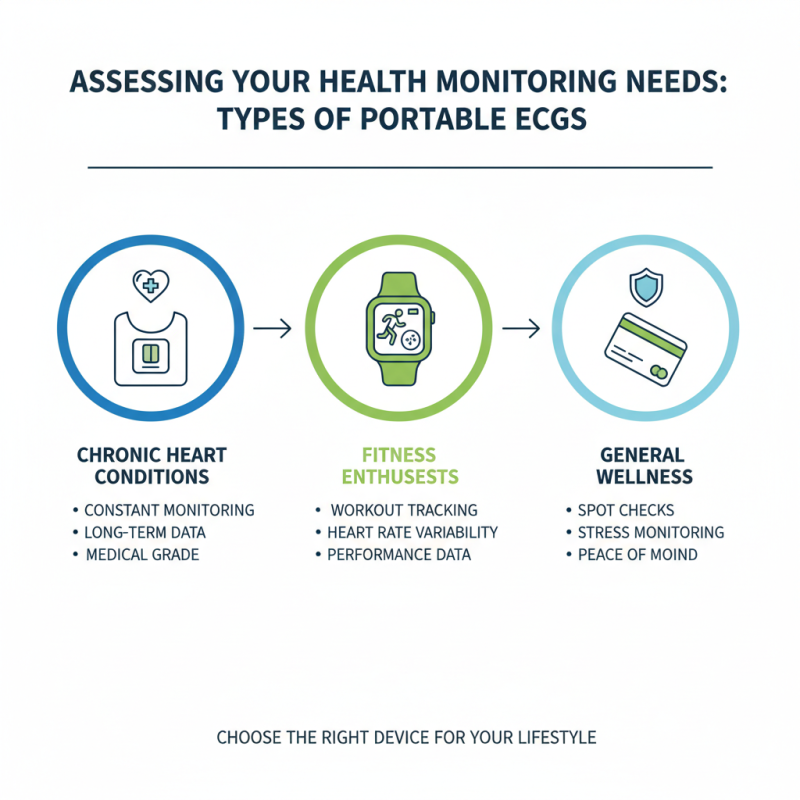
When considering a portable ECG, it's crucial to evaluate your health monitoring needs. Various types of portable ECG devices cater to different requirements. Some models are designed for those with chronic heart conditions, providing constant monitoring. Others are ideal for fitness enthusiasts, capturing heart data during workouts.
One challenge is choosing the right features. Basic models often offer limited data, while advanced versions provide detailed metrics like heart rate variability. Evaluating the necessity of these features can be daunting. Not everyone needs extensive analysis; simpler devices might suffice. Reflect on your health situation or any ongoing concerns.
Remember, accuracy and reliability vary among devices. Researching user reviews and expert recommendations can guide your choice. It's wise to consider the ease of use. Some devices can be complex, making them hard to operate. Think about whether you will regularly use the ECG, as frequent monitoring may require a more straightforward interface.
Comparing Brands: Reliability and Customer Reviews for ECG Devices
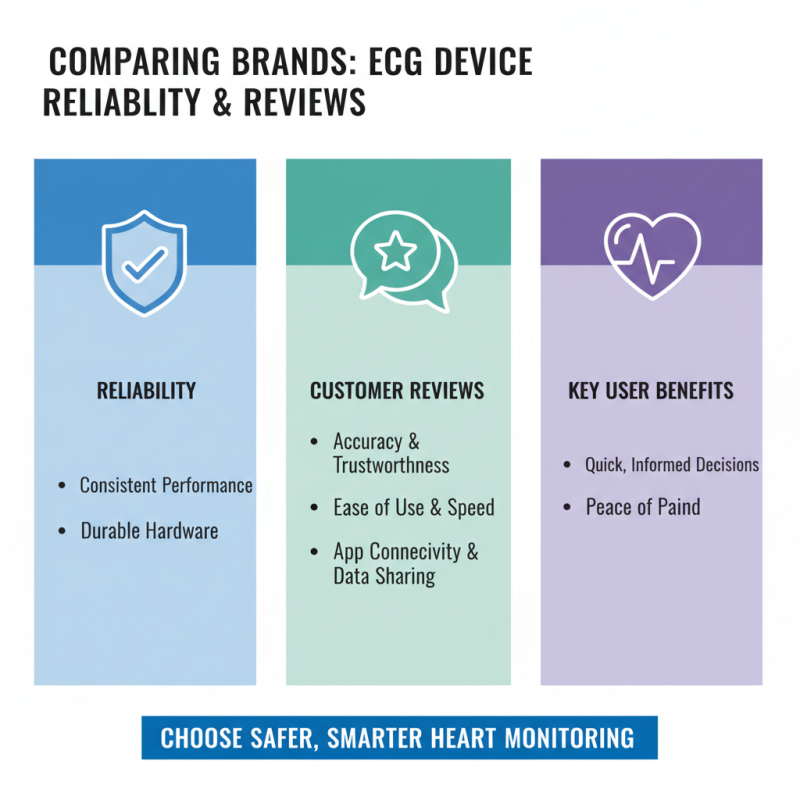
When selecting a portable ECG device, it’s essential to examine reliability and customer reviews closely. Real-world experiences often reveal the strengths and weaknesses of various brands. Customers appreciate devices that provide quick results. They also value accurate data. Reading through comprehensive reviews can provide insights into the user experience.
Many users share positive stories about the convenience and ease of use of portable ECGs. However, some mention issues with battery life or connectivity. These critiques can help you identify potential pitfalls. It’s crucial to note that not all reviews tell the same story. Discrepancies can arise based on individual needs.
Evaluating these factors helps create a well-rounded perspective. Consider device accuracy, validity of claims, and support services. Customer feedback can be illuminating. Still, weigh the information with your specific requirements in mind. Finding the right balance between features and reliability is key to making a wise choice.
Examining Connectivity Options: Bluetooth and Mobile App Integration
When choosing a portable ECG, connectivity options are crucial. Devices with Bluetooth capabilities allow for seamless data transfer. Mobile app integration offers additional features like real-time monitoring and health tracking. This makes managing your heart health more accessible.
Tips for picking the right device: Look for one with a user-friendly mobile app. Test the app’s interface before purchasing. Check if it stores historical data effectively. Compatibility with various smartphones is vital. Some devices might have limited app support, which can hinder your experience.
Remember, not every portable ECG excels in connectivity. Some may struggle with connection stability, leading to frustration. A reliable Bluetooth connection is essential for accurate readings. Read reviews to understand the experiences of others with connectivity issues. Enhancing your heart monitoring experience is about making informed choices.
Portable ECG Connectivity Options: Bluetooth vs Mobile App Integration
Evaluating Battery Life and Portability for On-the-Go Use
When selecting a portable ECG device, battery life and portability are critical factors. Most portable ECGs function best with a battery life ranging between 8 to 24 hours, depending on usage. Devices with a shorter battery life may require frequent recharging, impacting their usability during travel. Consider your daily activities. If you're often on the go, opt for a device that supports quick charging options.
Portability encompasses size and weight. An ideal portable ECG should weigh under 1.5 pounds and fit comfortably in a small bag. Look for models that integrate ergonomic designs for ease of use. Research shows that a compact ECG can enhance user compliance, allowing patients to monitor their heart health effortlessly. Remember, a convenient device enhances the likelihood of regular use.
Tips: Don’t overlook the importance of connectivity features. Devices with Bluetooth or Wi-Fi capabilities enable easy data transfer to your smartphone, facilitating real-time health monitoring. Check user reviews to understand real-world battery performance. Potential users should also test how intuitive the device is to use on the move. Balancing portability and battery life can be challenging, but it's essential for effective heart health management.